A legally blind racer and her husband: A Conversation with Blind Monkey Racing
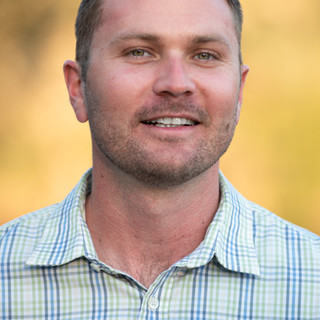
Who is Samantha? Legally blind since birth, and the passenger who throws herself across a sidecar platform at ninety miles an hour. She races with her husband Eric and uses his body movement as her guide to the track.

Samantha is legally blind, born with vertical nystagmus - a fault in the nerve that connects the eye to the brain that keeps her eyes in constant motion. As a child she had to be taught how to see; without vision teachers, she says, her eyes would have atrophied and she'd have gone dark completely. To this day she turns her head slightly to the left to bring the world into focus.
So naturally, she spends her weekends hanging off the side of a motorcycle at ninety miles an hour.
"I'm the one who hangs off the side," she says, grinning through the video call. "I'm the crazy one on the chair."
The "chair" also called a platform, or a hack is the sidecar. On a road-racing sidecar rig there's a driver on the bike and a passenger, or "monkey," who throws their entire body across a low platform to keep the machine planted through the corners. It is one of the most physical, most trusting, and least understood disciplines in all of racing. And in Samantha's case, the monkey can't see the apex.
Nobody in this story came from motorcycle road racing. That's the first thing to understand. The whole enterprise traces back to about 2019 and Joe Fink, Samantha's father-in-law, the man who created his own team and who built the chassis the teams run. Joe got pulled into sidecars, and then Joe went to work pulling everyone else in. Samantha, Eric (her husband), Mike and Faith, their racing family.

For Samantha and her husband, it solved a problem they'd been chewing on: they wanted something they could actually do together. They considered dirt track for a while, but that left one of them in the car and the other stuck in the pits cheering them on. They floated the idea of rally racing, until they priced it out. Sidecar racing was easy to get into with a low cost of entry and it gave both of them a job, instead of leaving one in the pits.
"Well, that looks pretty crazy," was the first thought, but it was quickly followed with "I think I'll try that.” Even though Samantha isn’t the driver, she clearly has the heart of a racer, no hesitation at all.
Mike ran with a different monkey for the first season and had to talk Faith in to it, but Samantha was part of the crazy with Eric from the beginning. I was told to climb on one of the first rigs built, sitting in the garage watching a Youtube video of a sidecar race and play around to get a feel for things and to see if it was something I might be interested in. After that it was game on and Eric and I's first time on one of these crazy things on the track was a first for both of us.
Their rig is not fast, and they'll be the first to tell you. It's a 1981 Honda CM400C, a barn-find twin with, as Samantha puts it, "not a whole lot of horsepower." That was the point. When you've never done anything like this, you don't want to be doing 120, 130 miles an hour while you figure out which way your body is supposed to go. Better to learn on something that tops out around ninety.

What the little Honda lacks in engine it makes up for in geometry. This is the racing family’s edge, and it's where Joe’s chassis work earns its keep. "We build a lot of geometry into the machines in order to make them perform the way they do," I was explained. "It's the geometric triangle we make, where the wheel of the sidecar is placed, how far from center. And the less weight. Our passengers will take care of the weight."
Getting curious about building your own? I was too, so I asked…I won’t tell you the exact number because every project will be different, but turnkey and track-ready was under 10k. “There are three of them sitting in the garage right now, and more being built.” If you are getting curious, feel free to give them a shout at Mike and Faiths Facebook page and they will happily build you one. (Blind Monkey page coming soon)
I assume you know, but if you do not….sidecars don't lean. At all. They sit dead upright. "It's like racing a four-wheeler missing a front wheel.”
Samantha runs a left-hand chair, rear exit meaning her platform sits on the left and she moves out behind the sidecar's wheel rather than in front of it. In a left-hander she's flung straight out over the void to keep the sidecar wheel from lifting off the tarmac. In a right-hander she's tucked up behind her driver, holding the rear wheel down. And because all her weight sits out on the left, the rig has a party trick: come screaming into a right-hander, grab a big handful of front brake, and the whole machine simply pivots itself around to the right. Left-handers are the opposite, you barely touch the brake, and you roll in smooth, because "you don't want to be near the brake" when the physics is working against you.

Samantha, as a reminder, cannot always get a clear picture of all this, so she told me she rides on shift points and brake points she's memorized, on the feel of her husband sliding his weight over to warn her a corner's coming. "It's mostly a feeling thing," she says. "There's a lot of unspoken communication. Once that visor goes down, everything else goes away. It's kind of our therapy."
I ask everyone I interview about their most memorable ride, and this is what I got.
It was their very first session at Pitt, Pittsburgh International Race Complex, brutally technical, a track they'd never seen. First big turn, way too hot, and both of them knew it in the same instant. "Time slowed down," she says. "The two of us looked at each other for a split second and it was like, okay. This is happening. We're doing this." They shot off into the grass, him staring down the tire wall, her watching the pack come down the track behind them, just hanging on. There was an access road right where they needed one. He got it stopped, looked down, and gave her a thumbs up. Back out they went.
There's no prize money in any of this. "We literally just race for a piece of plastic," Samantha says. They spend real money and put tons of miles towing their rig to places like New Jersey, Illinois, Michigan, South Carolina, Ohio, with the loss of Pitt Race, only an hour away from their house, they are feeling the sting of the loss. It should be known that Mike and Faith currently hold the national points lead, so the miles are worth it right now.
Their class is Classic Big Wheels, upright rigs on 18- and 19-inch street tires, not slicks. It sounds like a handicap until it rains, and then it's a superpower: they've passed full-blown Isle of Man TT style rigs in the wet, simply because the fast guys have nothing left when the slicks let go. "You guys are having more fun out there than anybody," other racers keep telling them.
The next race is Nelson Ledges in Ohio, September 11–13. After that, the pitch is simple and the family is aligned on the goal: they want this sport to grow. More people, more rigs, more tracks.
The team runs under two names. The family page is Ireland Farms. Samantha's own is Blind Monkey Racing, the logo is a monkey in sunglasses with a white cane, and yes, it's perfect. I wish they sold merch, but if you go watch a race they will happily give you one. Tell them I sent you!


