Stories from the road: A Conversation with Maurice Delage
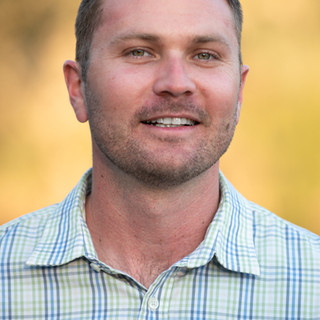
Who is Maurice Delage? A firefighter, 911 dispatcher, and self-taught photographer and filmmaker who spent a year teaching himself video from scratch to tell the story of a motorcycle that survived September 11th.
Maurice Delage has been riding for five or six years, though it was never really a choice so much as an inheritance. His father rode. His grandfather rode. His uncle still does. "If I didn't ride, I think there'd be a bigger problem." He's on a Harley Sportster right now, six foot two folded onto it, saving toward a Low Rider ST.

He doesn't post much about any of that. What goes up on his social media is almost entirely work, because work is where he draws his inspiration. He's been a firefighter since 2013. From 2022 to 2025 he worked full-time at Old School Harley-Davidson in Ellington, Connecticut, running social media and event coordination, before becoming a 911 dispatcher on the overnight third shift. Underneath all of it, he's been a photographer.
He started by joining the fire department as a junior cadet in high school but at the same time he was growing an interest for street photography.

In 2019, a medical issue forced him to resign from the department while he was away at college in Boston. "I still wanted to be around fire and to be around the firemen… So I started just showing up at the fire scenes taking pictures. I could still talk to the guys and, you know, be part of that firehouse camaraderie."
Every call that came over the scanner, he went to take photos. Three months in, people were texting him if he wasn't at a scene, asking where he'd been. Fire departments run strict social media policies, no photos of calls, nothing posted about the job, so Maurice found the obvious workaround: he started shooting fires that weren't his own department's. Two veteran fire photographers in his area, Patrick Dooley and Jim Peruta, who'd been doing it since the 1970s, took him under their wing. Eventually his own department gave him a helmet and jacket so he'd look official.

Growing up around firehouses, he'd seen the walls covered in old photographs: guys from the thirties and forties, horse-drawn carriages from the 1800s. Fire photography has always been part of how the job remembers itself.
I asked Maurice to speak on the idea that he might be capturing the worst moment of someone's life. "It didn't really feel like I was capturing that... I felt more like I was doing it for the firefighters themselves. I was capturing a piece of their history."
But none of this taught him how to shoot video. He would have to learn that on the fly.

On September 11, 2024, a severely damaged Harley-Davidson rolled into Old School Harley-Davidson. He recognized it instantly from photos of 9/11.

It was the motorcycle in Allan Tannenbaum's now-famous photograph: a 2000 Harley-Davidson Dyna Super Glide Sport, the bike Tim Duffy, an off-duty FDNY firefighter, rode toward the towers through the dust and debris on September 11, 2001, before spending nearly three months working Ground Zero.
Twenty-three years almost to the day later, Duffy's crew dropped the bike at Maurice's dealership. It was a somber day. Tim wasn't there; he was in the ICU after an accident.

The dealership's plan was a quiet restoration. There was uncertainty all around: the bike was twenty-five years old and its parts were obsolete. "In our minds we thought the restoration couldn't be done, but we also knew it needed to be done, and we'd have to find a way to make it happen."
Maurice grabbed a camera anyway, out of instinct, and started shooting. A week in, the idea of a real project started forming. By the time it was finished, he had shot, edited, color graded, and mixed the entire thing by himself across three different camera systems he had to teach himself to match in post.
"I would say imposter syndrome was like ninety percent of the project for sure. It was unlike anything I had ever done before."
The finished film, Still Riding: The Revival of an American Icon, follows the restoration itself, not as a museum piece but with the explicit goal that Duffy could ride it again. "Filming near the bike often felt wrong," Maurice says, like shooting a funeral. People stood around it in silence, aware of exactly what it was and where it had been. His first cut ran thirty-seven minutes and came in dark, heavier than what eventually aired. Having watched the final cut myself, I can say Maurice delicately balanced reverence while still honoring the journey of the bike.

He's reluctant to build anything off Tim Duffy's story for his own benefit. "I've done nothing in my life that comes remotely close to the badassery that this guy's done, at his age." He's thought about a longer director's cut, and about moving into behind-the-scenes vlogging work of his own, but hasn't committed to either.
While he reflected on my question, I asked him the same question I ask everyone, "what is the best ride you have ever taken?"
For Maurice, it wasn't a long one. Working at the dealership gave him free rein to take almost any bike out on the dealer plate, and one slow summer evening he borrowed a Low Rider ST he'd always liked the look of but never ridden, a bike he figured he'd never actually be able to justify financing. The loop was only four miles. There's a small airport behind the dealership, and the road out runs parallel to the runway. As he pulled out, a skydiving plane was taking off.
"As soon as I turned out of the parking lot and cracked the throttle, I just knew this was my next bike. It was a warm summer night right at sunset. The Top Gun theme song started playing in my mind, it felt like that scene from the movie where Tom Cruise rides beside the runway into the sunset on his Kawasaki GPZ900R."
"That was one of the first rides that really, really, really showed me how much I loved riding."
While we were talking he mentioned freedom, something I hear in most of my interviews and I pressed him for what he was seeking freedom from.
"When you get on the bike, especially a very stripped down bike that only has a speedometer, you're just going where you feel like going."
As you know, he works overnight as a 911 dispatcher, six or seven screens in front of him at all times, traffic cameras, door alarms, calls coming in, nothing happens without him seeing it. "That's all night. That's all day. My entire life is always constant input of fire calls and emergencies and tragedies."
On the bike, none of that follows him.
"I just have a helmet, no music, just exhaust and wind… Mental health is huge in any public safety job, whether you're law enforcement, fire, EMS, dispatcher, nurse, anything like that… being able to unplug and distance yourself from it is very important."


